The Faith of the Seven and the Politics of Moral Authority
Religious institutions can support royal power, challenge it and create hierarchies of their own.
Spoiler scope: Game of Thrones: seasons 1–6
Belief is not the same as an institution
The Faith of the Seven appears through ceremonies, buildings, clergy and ordinary expressions of devotion. These elements should not be collapsed into one motive. A worshipper's need for comfort differs from a leader's effort to organise followers, even when both use the same religious language. The series becomes more interesting when belief is allowed to be sincere without making every institutional action innocent.
Royal marriages and public rituals show the crown relying on religious recognition. The relationship appears stable when both institutions benefit from presenting the social order as legitimate. Yet that partnership contains a tension: a source of moral authority useful to a king may also claim the right to judge the king's household.
Criticism of privilege becomes organised power
The rise of the Sparrows draws energy from resentment of elite excess and suffering outside the court. The High Sparrow's austere presentation contrasts with the expensive world around him. That contrast helps explain his appeal. It is not enough to dismiss the movement as a random interruption of the royal plot; it speaks to inequalities the programme has already shown.
At the same time, the movement's disciplinary practices expose its own coercion. Challenging aristocratic privilege does not automatically produce freedom for everyone subject to religious authority. The treatment of sexuality and public humiliation make that contradiction difficult to avoid. A movement can identify genuine injustice while imposing other forms of harm.
The crown misjudges its partner
Cersei's attempt to use religious power against rivals assumes that its leaders will remain manageable. The failure of that assumption reveals the difference between granting an institution leverage and retaining control over how it uses that leverage. Once it can organise followers and enforce judgements, it is not simply another instrument in a private feud.
The destruction of the Great Sept violently ends one immediate confrontation, but does not resolve the underlying questions about belief, legitimacy or popular grievance. A building can be destroyed more quickly than the social conditions that made its authority attractive. The television narrative moves on rapidly; that pace should not be mistaken for proof that every consequence has disappeared.
For discussion, separate three questions: what the Faith teaches, how its institutions exercise power, and why particular people turn towards it. Different scenes answer different questions. Keeping them apart avoids the shallow conclusion that the story merely says religion is good or bad. It instead shows how moral language becomes entangled with protection, ambition, punishment and resistance.
The crowd is not a single believer
Public religious gatherings can look unanimous from a distance. Up close, people may attend from devotion, fear, curiosity or a desire for protection. The television adaptation does not give every participant a voice, so claims about what all followers truly want would be speculative. The visible unity of a procession is not a complete map of its members' motives.
The same caution applies to court participation in religious ceremony. Political calculation does not prove that a character has no sincere belief, just as belief does not remove calculation. People can seek comfort and advantage within the same ritual. Allowing that mixture produces a more credible reading than sorting every religious action into either pure faith or conscious hypocrisy.
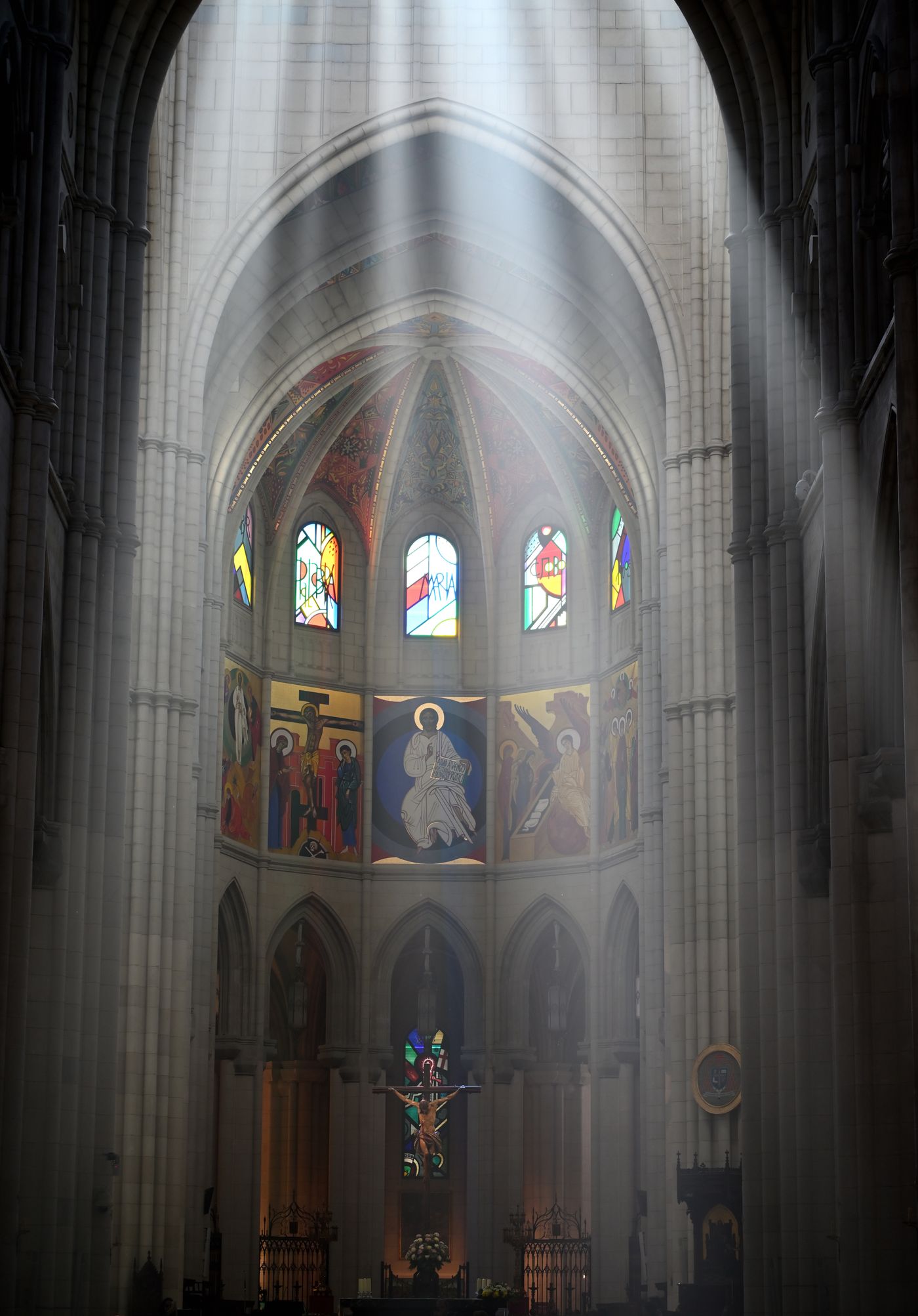
Architecture contributes to the institution's authority. A monumental building makes continuity visible and provides a place for collective recognition. Destroying it is therefore both a physical attack and an assault on a shared centre of meaning. The event's spectacular efficiency should not distract from the different kinds of loss contained within it.
Moral authority can confront royal privilege without being free from coercive power itself.
Another angle on the story.
The Night's Watch: An Institution with a Divided Purpose
The black cloak promises a new identity, but the order never fully escapes the society that supplies its recruits.
Read the essay
The Wall Is More Than a Barrier
Gates, lifts, tunnels and garrisons reveal the everyday machinery behind the immense northern defence.
Read the essay
Winterfell's Crypts and the Weight of Family Memory
Below the castle, stone figures turn ancestry into a place the living must enter.
Read the essay