Dragons, Chains and the Problem of Control
Daenerys's bond with her dragons does not remove the danger of treating living creatures as instruments.
Spoiler scope: Game of Thrones: seasons 1–8
Children and weapons
Daenerys describes her dragons through a language of kinship, while other people see extraordinary military power. The tension between those descriptions is central. A child is a being to care for; a weapon is an instrument to direct. The same creature cannot move between those categories without moral consequences for the person claiming authority over it.
As the dragons grow, the difference becomes harder to manage. Their increasing power strengthens Daenerys's position while exposing people around her to risks she cannot simply wish away. Affection does not establish complete control. The programme repeatedly places her emotional bond beside evidence that the creatures have appetites, movements and capacities beyond ordinary human management.
Confinement is not a solution without cost
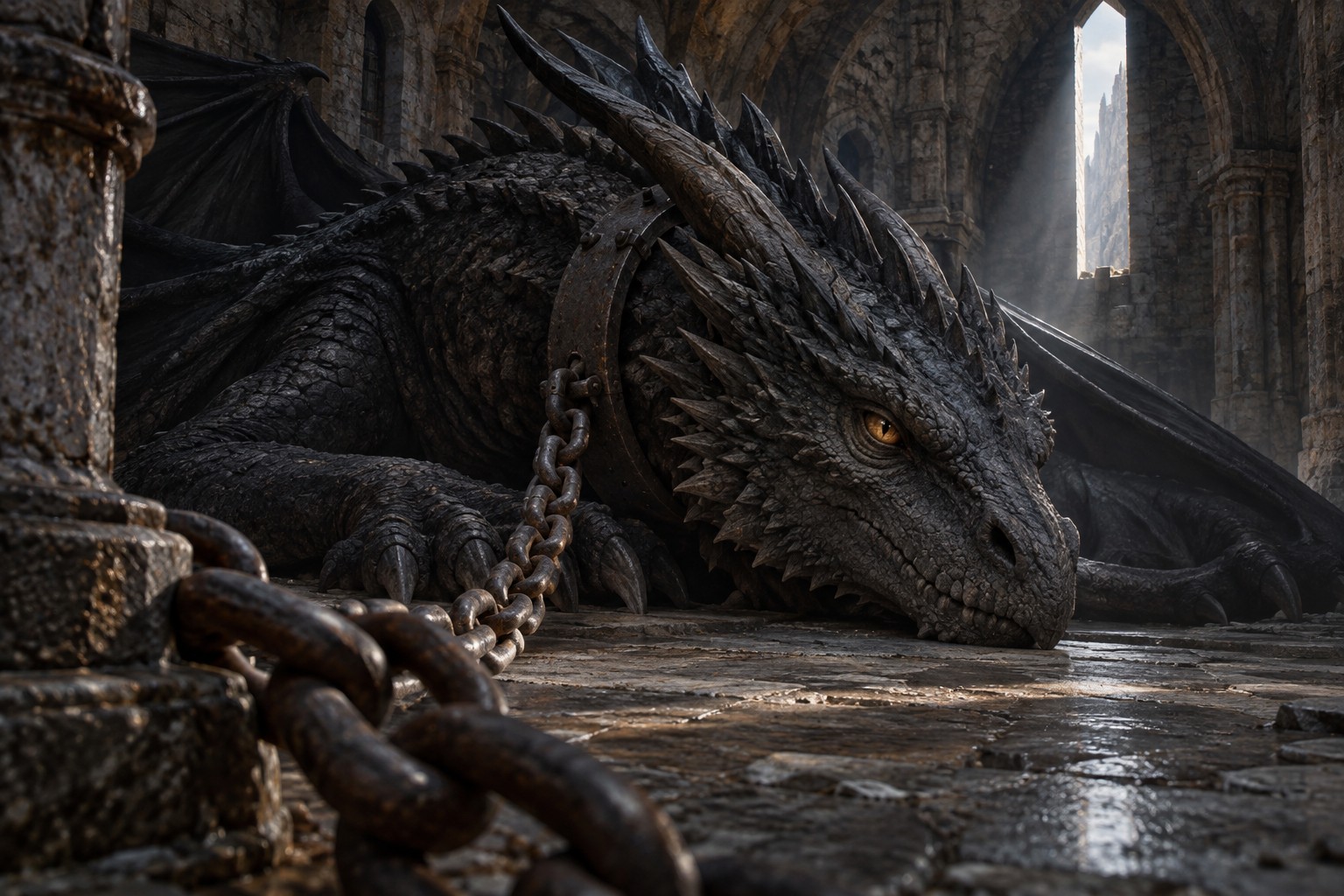
The decision to chain two dragons follows the presentation of harm to a child. It is an attempt to respond to danger, but the response creates another disturbing image: immense living beings confined in darkness by the person who calls herself their mother. The scene refuses a clean separation between responsible restraint and painful domination.
Their captivity also complicates the political promise attached to liberation. A ruler may oppose the ownership of people while still depending on control over other beings. This is not an argument that the situations are identical. It is a way of noticing the unresolved relationships that the language of freedom can leave outside its own frame.
Military advantage changes everyone else's choices
When dragons are deployed in war, opponents must adapt to a capability that ordinary defences struggle to meet. The spectacle can make victory appear inevitable, but the narrative also shows vulnerability and loss. The creatures are neither invincible machines nor harmless symbols of a rightful claim. Their presence changes the scale of possible violence.
A useful reading keeps agency and responsibility distinct. A dragon is not simply a human official following a written order, yet the rider's decisions remain consequential. Calling the creature unpredictable cannot erase responsibility for choosing to bring its destructive power into a populated place. The relationship is precisely what makes control such an unstable justification.
The television finale gives Drogon's response symbolic weight without providing a verbal explanation of his reasoning. Viewers can interpret the destruction of the throne as an image of power's failure, but should not present that interpretation as a proven account of what the creature intellectually understands. Preserving that uncertainty respects the difference between an evocative scene and an explicit statement of motive.
A bond does not distribute risk equally
Daenerys experiences the dragons through intimacy and shared history. A farmer or soldier encountering them may experience only danger. Neither perspective makes the other disappear. Political responsibility begins when the rider must account for people who do not share her bond and cannot simply choose to trust it.
The language of destiny can make this asymmetry harder to see. If possessing dragons is treated as proof of a right to rule, their power starts justifying itself. But capability and entitlement are separate propositions. A creature's willingness to carry someone does not establish the consent of the communities beneath its flight.
This is why scenes of vulnerability matter alongside scenes of dominance. Loss reveals that the bond has emotional stakes rather than functioning as an effortless reserve of force. At the same time, grief does not suspend the responsibility attached to remaining power. The show is most troubling when a personal wound and a military capability become closely joined, because the resulting consequences extend far beyond the person who suffered the wound.
The dragons are powerful because they are living beings, and that is also why treating them as perfectly controllable weapons fails.
Another angle on the story.
The Night's Watch: An Institution with a Divided Purpose
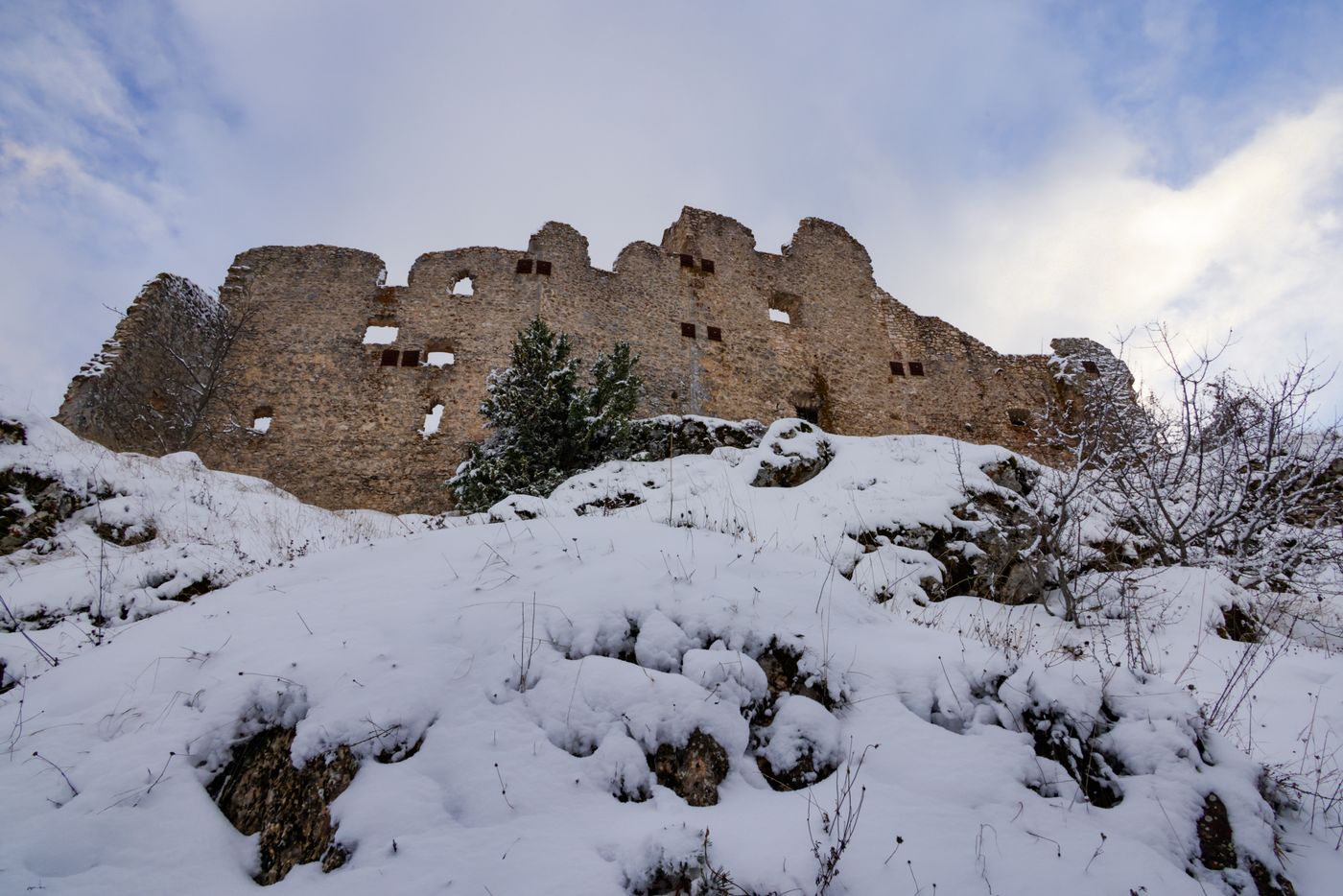
The black cloak promises a new identity, but the order never fully escapes the society that supplies its recruits.
Read the essay
The Wall Is More Than a Barrier
Gates, lifts, tunnels and garrisons reveal the everyday machinery behind the immense northern defence.
Read the essay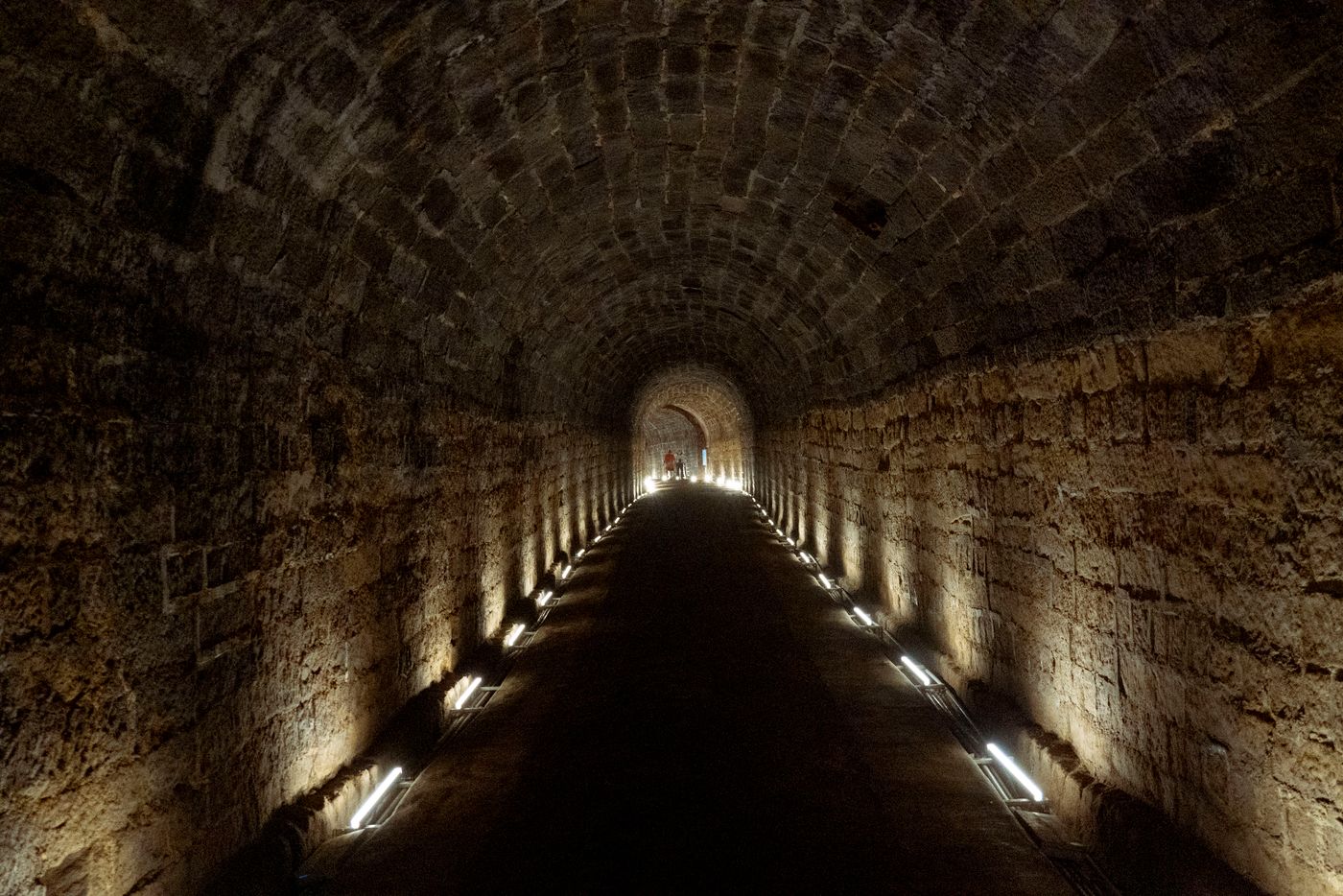
Winterfell's Crypts and the Weight of Family Memory
Below the castle, stone figures turn ancestry into a place the living must enter.
Read the essay