Wildfire Is Not a Stable Deterrent
The green flame promises overwhelming power while exposing the danger of secret stockpiles.
Spoiler scope: Game of Thrones: seasons 2–6
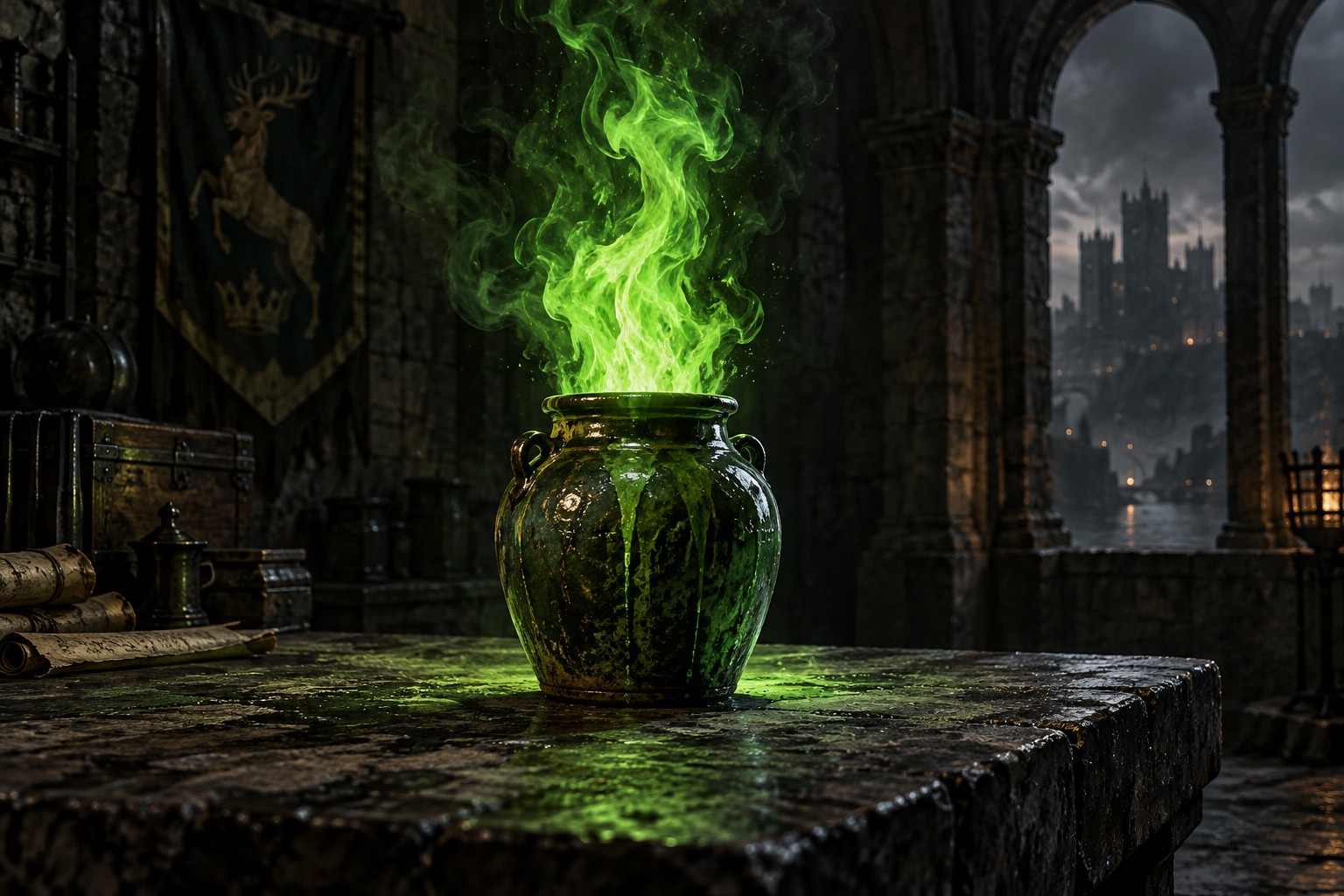
A weapon without a clean boundary
Wildfire is frightening because its effects exceed the neat intentions of the person who orders its use. At the Blackwater, the green explosion changes the battle in seconds. The spectacle compresses planning, secrecy and mass destruction into a single visual event. Yet the very qualities that make the substance useful also make it difficult to imagine as an ordinary, controllable instrument of government.
It is tempting to call wildfire a straightforward nuclear metaphor. That comparison can illuminate the asymmetry between conventional forces and catastrophic weapons, but it should remain an analogy rather than a claim of exact equivalence. The series does not establish the institutions, technical safeguards or international arrangements needed for a detailed theory of deterrence.
Secrecy changes the threat
A deterrent is supposed to affect an opponent's behaviour before it is used. Hidden stores beneath a city operate differently when most potential victims do not know they exist. Secrecy protects the operator's advantage while denying others the information needed to judge their danger. The weapon becomes a buried political inheritance, available to someone willing to activate it.
Jaime's account of the Mad King's plan gives those stores a history. The later destruction of the Great Sept shows the threat surviving the ruler associated with its preparation. A dangerous capability can outlast the crisis that produced it. Replacing the person at the top does not automatically remove the means of catastrophic violence beneath the streets.
Winning the moment, losing the city
The Sept explosion removes immediate adversaries, but calling it a complete political solution would confuse elimination with consent. Violence can clear a room without creating affection, confidence or a durable settlement. The show's subsequent pace leaves some civic consequences underexplored; that absence should not be filled with invented statistics or imaginary public approval.
On screen, the beauty of the green fire creates a deliberately uncomfortable viewing experience. We may admire the sequence's construction while recognising the horror of the act. Keeping those responses separate is useful criticism. An effective image of power is not evidence that the power is wise, legitimate or safe for anyone living nearby.
Wildfire demonstrates how an inherited weapon can turn political insecurity into irreversible destruction.
Another angle on the story.

A Crown Is Not Consent: Why Legitimacy Keeps Breaking
Inheritance, victory and recognition offer different answers to the question of who may rule.
Read the essay
When an Oath Conflicts with Conscience
Promises give Westeros a moral vocabulary—and create obligations that cannot always coexist.
Read the essay
Grain Before Glory: The Politics of Hunger
Food supplies make the difference between possessing a city and being able to govern it.
Read the essay